
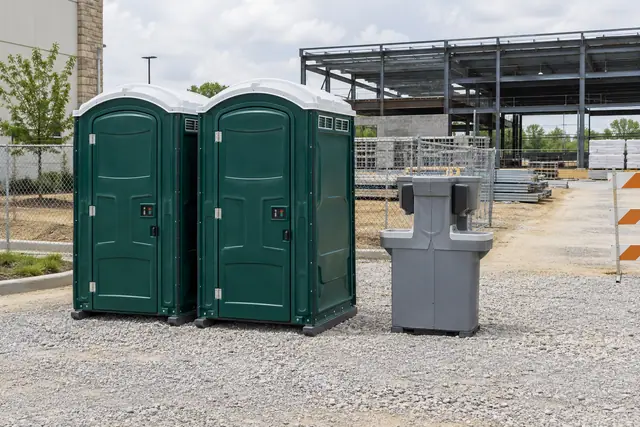
Draw the worker route and the vehicle route
Mark where the crew enters, where work is taking place and which routes delivery vehicles will use. The restroom approach should not require workers to pass through an active unloading point or step over stored materials. Keep the door area and any washing station in the layout, not just the cabin footprint.
Discuss delivery and servicing access with the rental provider. A gap that allows a person through does not establish that the provider's vehicle can reach the equipment. Give them accurate gate, surface and overhead-clearance information.
Consider how the job changes
Excavation, scaffolding, fencing or a new material stack can affect a previously workable position. Identify the person responsible for noticing those changes and notifying the provider before access is lost. Do not relocate the unit with site machinery or improvise a lifting method.
If work separates into different zones, explain the real walking and access restrictions instead of automatically adding or removing toilets. The crew-planning guide covers user numbers; this page focuses on whether the equipment remains usable where it is placed.
Check the last working day as carefully as the first
Leave a route available for collection after the main contractor's other equipment has gone. Confirm who controls the gate and whether landscaping or final surfacing changes the approach. Report a delay in the project before the scheduled collection leaves the remaining workers without facilities.
Questions before you book
Should the toilet be beside the site entrance?
It may be a workable option, but the entrance must also handle workers and vehicles. Review the actual movement pattern and servicing access rather than choosing the gate automatically.
Can we shift it as the work moves?
Arrange any relocation with the provider. A site change can affect equipment handling and the service route, even when the move looks short.