
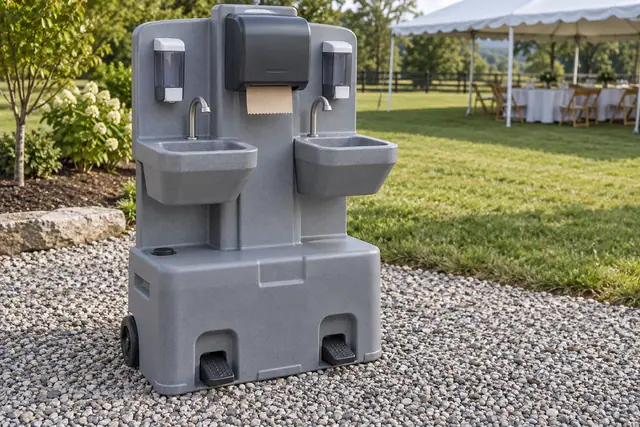
Decide what washing function is needed
Explain the users and activity: a crew taking meal breaks, guests eating outdoors or a group handling shared equipment may have different patterns. Ask whether the proposed station provides the required washing method and what supplies are included.
Hand sanitizer and soap-and-water washing are different options. Do not assume one replaces the other for every activity. Food-service or other regulated work may have specific requirements that should be checked with the relevant operator or authority.
Make the station easy to find and approach
Locate washing on the natural path out of the restroom area without blocking the toilet doors. Leave room for people waiting and for anyone who needs additional approach space. The wash point should not force users through a vehicle lane or behind stored materials.
Consider the station's footprint and the provider's servicing method. Tell the provider about the expected surface and any proposed utility connection. Do not connect hoses, drains or power unless the equipment arrangement specifically calls for them.
Agree how supplies and water are maintained
Ask who handles replenishment and wastewater, and what the host should observe between service visits. Report an empty or malfunctioning station promptly. The host can communicate the problem and keep the area clear without attempting to open or repair the equipment.
If the event grows, reassess washing demand alongside toilet demand. A restroom plan is incomplete if people can use a toilet but then face an unusable washing point.
Questions before you book
Can the station supply drinking water?
Do not treat washing water as a drinking-water supply. Arrange drinking water separately and use each system only for its stated purpose.
Should a sink be ordered for every unit?
Discuss the number and placement of wash points with the provider using the actual layout and users. The right arrangement is not determined by a photograph of a typical setup.