
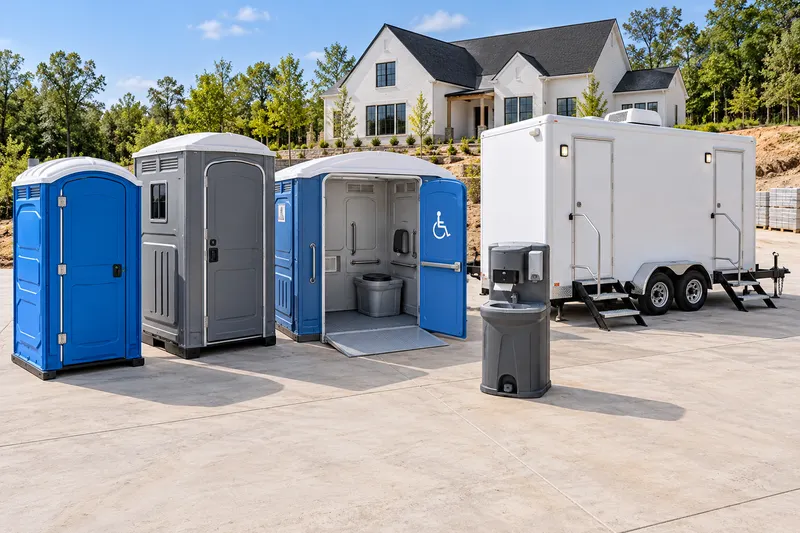
Define the worker facility requirement first
Explain how many volunteers or workers will be present and when they will take breaks. Ask which existing bathrooms they are permitted to use. A cleanup collection point or rubbish container does not supply a restroom simply because both are temporary site services.
Include ordinary handwashing and accessible-use needs in the equipment brief. If the work involves unfamiliar or potentially hazardous material, have the responsible organizer establish the appropriate specialist handling and hygiene arrangements; a general wash station does not answer every risk.
Keep the waste plan out of the toilet area
Choose separate positions for the restroom approach, wash point and material collection. Bagged waste, tools and items waiting for pickup should not accumulate beside toilet doors. Do not place cleanup waste or liquids in equipment intended for restroom use.
If a dumpster is needed, make a separate enquiry describing the material and loading conditions. Public bulk-collection notices should not be read as acceptance of a private project's entire waste stream or a promise to remove hired equipment.
End each service deliberately
The last volunteers may still need toilets after a waste collection occurs. Conversely, a restroom pickup does not mean the property cleanup is complete. Confirm the use period and collection arrangements separately for each service.
Use current operator information for the actual property and collection programme. This guide is a conditional workday plan, not a claim that a village cleanup is scheduled or that this provider performs municipal collection.
Questions before you book
Does a waste-container order include a portable toilet?
No automatic combined arrangement should be assumed. Describe each equipment need separately.
Can cleanup material go into the toilet's waste tank?
No. Use the equipment only for its agreed purpose and arrange the correct route for project waste.